High Protein Diet Plan for Women Over 40
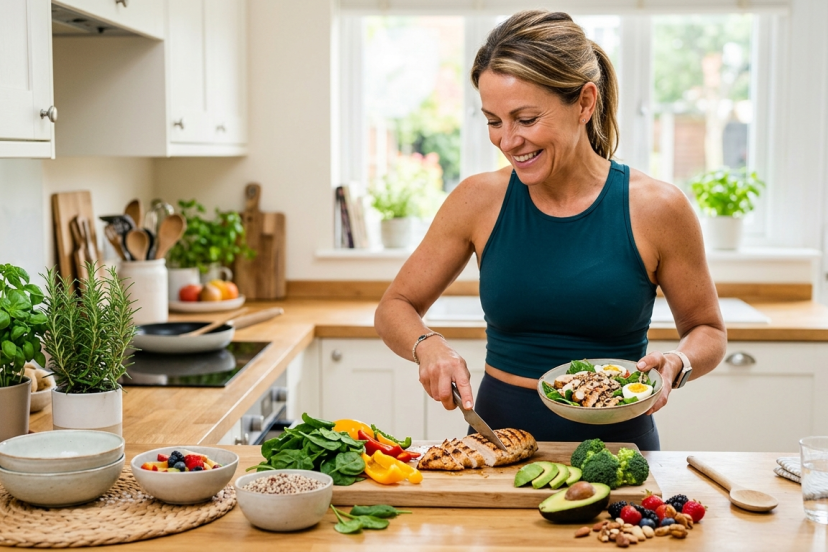
Let me be real with you — turning 40 felt like someone quietly flipped a switch in my body without telling me. My metabolism slowed down, my energy dipped, and I started noticing things I never had before: more fatigue, softer muscles, and joints that complained a little louder every morning. Sound familiar? You’re not alone, and more importantly, you’re not powerless.
One of the most transformative things I did was overhaul my eating habits with a proper high protein diet plan. And I’m not talking about chugging chalky shakes or eating nothing but chicken breast. I mean a smart, sustainable approach designed specifically for women over 40 — one that addresses our unique hormonal, muscular, and most critically, our bone health needs.
What Makes a High Protein Diet Plan Different for Women Over 40?
Hormonal Shifts and Muscle Loss
After 40, especially as we approach perimenopause and menopause, estrogen levels begin to decline. Estrogen isn’t just a reproductive hormone — it plays a key role in preserving muscle mass and, crucially, bone density. When estrogen drops, so does our ability to hold onto lean muscle. This is where a well-designed high protein diet plan becomes your best ally.
Protein and Satiety: Fighting the Metabolism Slowdown
Here’s the beautiful thing about protein: it keeps you fuller, longer. Unlike simple carbohydrates that spike blood sugar and leave you hungry an hour later, protein digests slowly and triggers satiety hormones. For women over 40 who are battling a slower metabolism, this is gold.
How Much Protein Do You Actually Need?
Most general guidelines recommend 0.8 grams of protein per kilogram of body weight, but research increasingly suggests that women over 40 benefit from 1.2 to 1.6 grams per kilogram — especially if you’re active. Think of protein as the scaffolding that holds your body together. Without enough of it, things start to crumble — and I mean that quite literally when it comes to your bones.
Breaking It Down by Meal
Rather than trying to eat all your protein in one sitting (which your body can’t efficiently use anyway), spread it across three to four meals:
- Breakfast: 25–30g protein
- Lunch: 30–35g protein
- Dinner: 30–35g protein
- Snack: 15–20g protein
This approach keeps muscle protein synthesis humming throughout the day — like keeping a steady fire burning rather than dropping a single giant log on cold ashes.
The Best High Protein Foods for Women Over 40
Animal-Based Proteins
- Eggs: A nutritional powerhouse. Two eggs deliver about 12g of protein plus choline for brain health.
- Salmon: Rich in protein and omega-3 fatty acids, which reduce inflammation — a major concern post-40.
- Greek Yogurt: One cup packs 17–20g of protein and delivers calcium for bone support.
- Chicken Breast: Classic for a reason — lean, versatile, and protein-dense.
Plant-Based Proteins
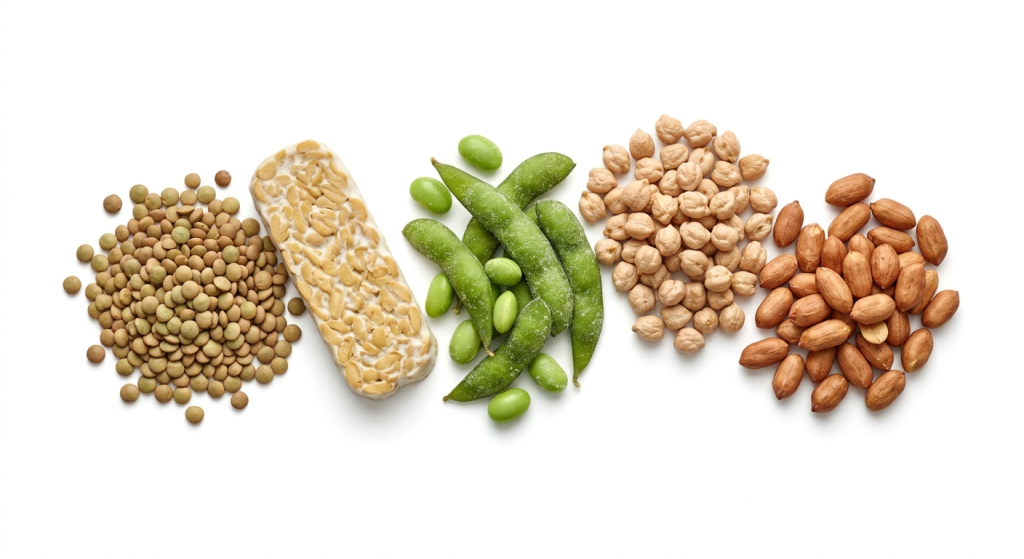
- Lentils: A cup of cooked lentils offers 18g of protein plus iron, which women often need more of.
- Tempeh: Fermented soy that delivers around 20g of protein per serving.
- Edamame: A fun snack with 17g protein per cup.
- Chickpeas: Fiber + protein = sustained energy and a happy gut microbiome.
- Groundnuts (peanuts) : one of the best plant-based protein sources available! Here’s a quick breakdown:
Protein Content in Groundnuts
| Form | Serving Size | Protein |
| Raw groundnuts | 100g | ~26g |
| Roasted groundnuts | 100g | ~24g |
| Peanut butter (smooth) | 2 tbsp (32g) | ~8g |
| Peanut flour | 100g | ~52g |
| Boiled groundnuts | 100g | ~7g |
Why Groundnuts Are Great for Women Over 40:
- High protein and healthy fats in one snack
- Rich in magnesium — great for bone health
- Contain resveratrol, an antioxidant linked to reduced inflammation
- Budget-friendly and widely available
- Good source of biotin, which supports healthy hair and skin — a common concern after 40
One Thing to Watch:
Groundnuts are calorie-dense — about 567 calories per 100g raw. A sensible portion for snacking is around 30g (a small handful), which gives you roughly 8g of protein without going overboard on calories.
Best Ways to Use Them in Your High Protein Diet Plan:
- Sprinkle on salads or oatmeal
- Blend into smoothies
- Pair with fruit as a mid-morning snack
- Add to stir-fries or grain bowls
- A humble but mighty protein source!
A Sample High Protein Diet Plan for Women Over 40
Breakfast: Scrambled eggs (3 eggs) with spinach and feta on whole grain toast — ~28g protein
Mid-Morning Snack: Greek yogurt with walnuts and berries — ~20g protein
Lunch: Grilled salmon over a bed of quinoa and roasted vegetables — ~35g protein
Afternoon Snack: Hummus with sliced veggies and a small handful of almonds — ~12g protein
Dinner: Baked chicken thigh with lentil soup and a green salad — ~38g protein
Total: ~133g protein — right in the sweet spot for a 65kg active woman.
A Sample High Protein Diet Plan for Women Over 40 (Vegan)
Breakfast: Tofu scramble with spinach, turmeric, and nutritional yeast on whole grain toast — ~28g protein
Mid-Morning Snack: Soy yogurt with chia seeds, flaxseeds, and mixed berries — ~18g protein
Lunch: Tempeh Buddha bowl with quinoa, roasted chickpeas, edamame, and tahini dressing — ~36g protein
Afternoon Snack: Hummus with sliced veggies and a small handful of pumpkin seeds — ~12g protein
Dinner: Red lentil dal with brown rice, steamed broccoli, and a side of black bean soup — ~38g protein
Total: ~132g protein — perfectly on target for an active woman over 40.
Pro tip
Pair iron-rich plant foods like lentils and spinach with vitamin C sources (lemon juice, bell peppers) to boost absorption — especially important for women over 40 who are transitioning away from animal proteins.
The Critical Connection: High Protein Diet Plan and Bone Health
Here’s what I wish someone had told me sooner. Most women focus on calcium alone for bone health — dairy products, leafy greens, done. But there’s so much more to the picture.
Why Protein Is Bone’s Best Friend
About 50% of your bone’s structure is made of protein — specifically collagen. Without adequate dietary protein, your body literally cannot produce the building blocks needed to maintain bone matrix. Studies show that women with higher protein intake have measurably better bone mineral density, particularly at the spine and hip — the two most fracture-prone areas post-menopause.
Bone Density Decline: A Silent Epidemic
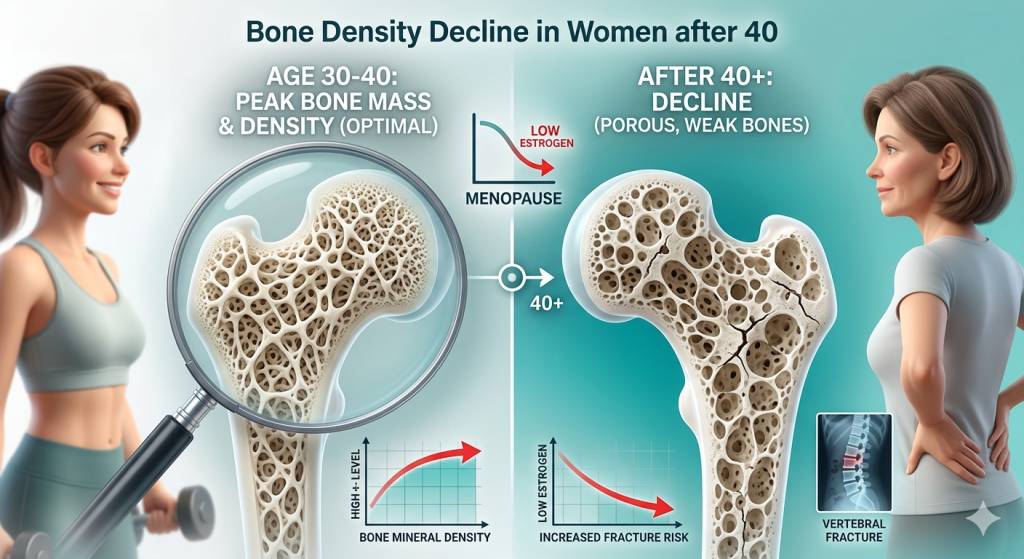
This is where things get serious. Osteoporosis affects approximately 200 million women worldwide, and most don’t know they have it until a fracture occurs. In fact, a woman over 50 has a greater chance of a bone fracture than she does of breast cancer, heart attack, and stroke combined. This isn’t meant to scare you — it’s meant to wake you up.
Going Beyond Diet: Addressing Bone Loss at Its Root
A high protein diet plan is incredibly powerful, but for women over 40 who are serious about protecting their bones, diet alone may not be enough. I’ve been researching natural ways to support bone density, and one resource that genuinely impressed me is a program called The Bone Density Solution.
What the Bone Density Solution Offers
This program takes a holistic, science-backed approach to rebuilding bone density without relying solely on pharmaceuticals. It combines nutritional guidance (including, yes, high protein principles) with lifestyle changes shown to naturally stimulate bone regeneration. If you’ve been told your bone density is declining — or you just want to get ahead of it — I genuinely believe this is worth your attention. It addresses what your doctor might not have time to explain: that bone loss is reversible with the right strategy.
Pairing Your High Protein Diet Plan with Exercise
Resistance Training: Non-Negotiable
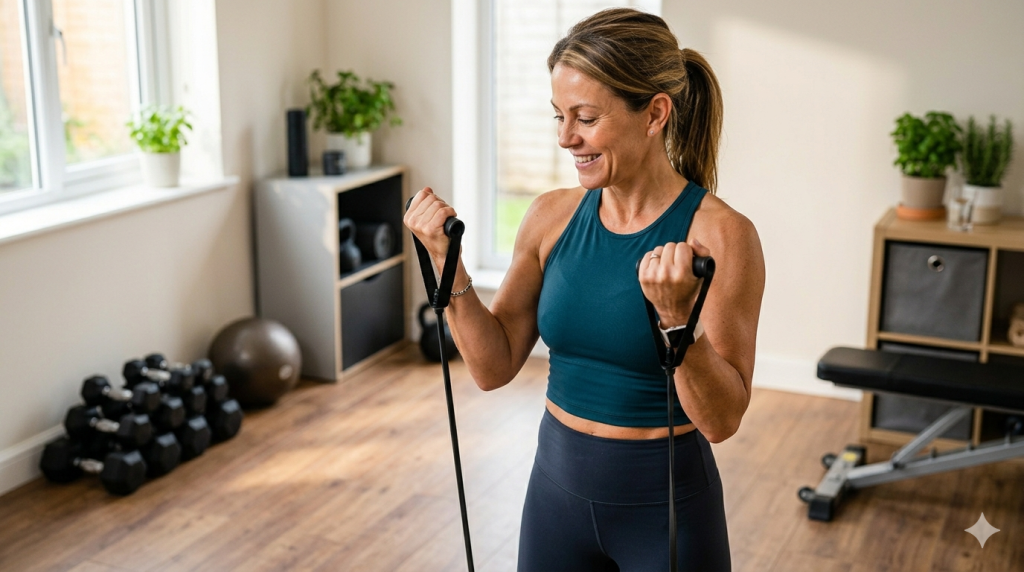
Protein fuels muscle, but muscle isn’t built without stimulus. Resistance training — think weights, resistance bands, or bodyweight exercises — sends signals to your bones to grow stronger. The mechanical load literally tells your body, “Hey, we need more here.” Combining a high protein diet plan with two to three sessions of strength training weekly is the one-two punch that delivers real results.
Weight-Bearing Cardio Matters Too
Walking, dancing, hiking — these count. Any activity where you’re upright and bearing your own body weight stimulates bone-building cells called osteoblasts. Think of osteoblasts as tiny construction crews. Protein gives them the raw materials; exercise tells them to get to work.
Common Mistakes Women Over 40 Make with Protein
Mistake #1: Not Eating Enough Total Calories
Under-eating is rampant among women who are trying to lose weight. But crash dieting signals your body to cannibalize muscle and bone for energy. Your high protein diet plan must sit within a reasonable caloric framework — not a severe deficit.
Mistake #2: Relying Too Heavily on Protein Powders
Supplements have their place, but whole foods deliver co-nutrients that powders don’t. Real salmon gives you omega-3s. Real eggs give you choline. Real Greek yogurt gives you probiotics. Use supplements to fill gaps, not as your primary protein source.
Mistake #3: Ignoring Micronutrients That Protein Needs to Work
Vitamin D helps your body absorb calcium. Magnesium activates Vitamin D. Vitamin K2 directs calcium into bones rather than arteries. These are the unsung heroes of bone health — and they work with your high protein diet plan, not separately from it.
Supplements Worth Considering for a High Protein Diet Plan
While food should come first, these supplements support a high protein diet plan for women over 40:
- Collagen peptides: Directly support bone matrix
- Vitamin D3 + K2: The bone health dream team
- Magnesium glycinate: Better absorbed, gentler on digestion
- Omega-3 fatty acids: Reduce inflammatory bone loss
Here are natural food sources for each:
Collagen Peptides Foods that boost your body’s own collagen production:
- Bone broth (chicken, beef, or fish)
- Chicken skin and cartilage
- Fish skin (salmon, cod)
- Egg whites (rich in proline, a collagen building block)
- Berries, citrus, and bell peppers (vitamin C triggers collagen synthesis)
Vitamin D3 + K2
- Fatty fish like salmon, mackerel, and sardines (D3)
- Egg yolks (both D3 and K2)
- Hard cheeses like Gouda and Brie (excellent K2 source)
- Natto — fermented soybeans (the highest known food source of K2)
- Beef liver (D3 and K2)
- Sun-dried mushrooms (plant-based D)
Magnesium (Note: magnesium glycinate is a supplement form — these foods deliver natural magnesium):
- Dark chocolate (70%+)
- Pumpkin seeds
- Spinach and Swiss chard
- Black beans and lentils
- Avocado
- Almonds and cashews
Omega-3 Fatty Acids
- Salmon, mackerel, herring, and sardines
- Flaxseeds and flaxseed oil
- Chia seeds
- Walnuts
- Hemp seeds
- Seaweed and algae (the vegan source that fish themselves eat)
Quick tip
No single food does everything — variety is your best strategy. A colorful, protein-rich plate naturally covers most of these bases simultaneously.
Practical Tips to Stick With Your High Protein Diet Plan
Batch Cook on Sundays
Prep your proteins ahead of time — boil eggs, grill chicken, cook a big pot of lentils. When healthy food is ready and waiting, you make better choices.
Front-Load Protein in the Morning
A high-protein breakfast sets your hunger hormones on the right track for the entire day. Women who eat protein-rich breakfasts consume fewer calories overall.
Keep Emergency Snacks Handy
Nuts, cheese sticks, hard-boiled eggs, Greek yogurt cups — keep these in your bag, your desk, your car. Hunger is the enemy of good intentions.
Conclusion
A well-crafted high protein diet plan is genuinely one of the most powerful tools a woman over 40 has in her health arsenal. It supports lean muscle, boosts metabolism, stabilizes energy, and — critically — provides the foundational building blocks for strong, resilient bones. But as we’ve explored, optimal bone health often requires more than diet alone. If you’re serious about not just slowing but reversing bone density loss, I encourage you to explore The Bone Density Solution — a comprehensive program that takes the guesswork out of protecting your skeleton for decades to come. You’ve invested this much in reading this article. Why not invest in your bones?
Frequently Asked Questions
1. How quickly will I see results from a high protein diet plan after 40?
Most women notice improvements in energy and body composition within four to six weeks. Bone density changes take longer — typically six to twelve months — but the process begins immediately when you give your body the right nutrients.
2. Can I follow a high protein diet plan if I’m vegetarian or vegan?
Absolutely. Lentils, tempeh, edamame, chickpeas, tofu, and protein-rich grains like quinoa and amaranth can all meet your protein needs. You may just need to be more intentional about combining sources.
3. Is too much protein bad for my kidneys?
For healthy women with no pre-existing kidney conditions, research consistently shows that higher protein intakes are safe. If you have kidney disease, consult your doctor before increasing protein significantly.
4. Should I take collagen supplements in addition to a high protein diet plan?
Collagen supplements can be a helpful addition, particularly for bone and joint health. They provide specific amino acids — glycine and proline — that are less abundant in standard protein sources.
5. What’s the single most important change a woman over 40 can make for bone health?
Combining a high protein diet plan with regular resistance training is the most evidence-backed approach. And if you want a structured, expert-guided plan to reverse bone density loss specifically, looking into a dedicated bone health program like The Bone Density Solution is a smart next step.
6. Is yoga a good exercise to build bone density?
Yes, yoga is great for women over 40! Here’s why it complements a high protein diet plan beautifully:
For Bones & Muscles: Certain yoga poses are weight-bearing — think Warrior II, Downward Dog, and Plank — which stimulate bone-building cells just like other resistance exercises do. It’s gentler on joints than heavy lifting, making it ideal as we age.
For Hormones: Yoga reduces cortisol (the stress hormone). High cortisol actually accelerates bone loss and muscle breakdown — so managing stress through yoga directly supports everything your high protein diet plan is working to achieve.
For Balance & Flexibility: Falls are one of the leading causes of fractures in women over 50. Yoga significantly improves balance and body awareness, reducing that risk.
What Yoga Can’t Do: It’s worth being honest here — yoga alone isn’t as effective at building bone density as progressive resistance training (lifting weights, resistance bands). Think of it as a powerful complement, not a replacement. The ideal combination for women over 40 is:
- 2–3 days of resistance training
- 2 days of yoga or Pilates
- Daily weight-bearing activity like walking
So yes — roll out that mat! Just make sure it’s sitting alongside your weights, not replacing them. And of course, keep fueling it all with your high protein diet plan.