Does Depression Cause Memory Loss? What I Learned About My Brain
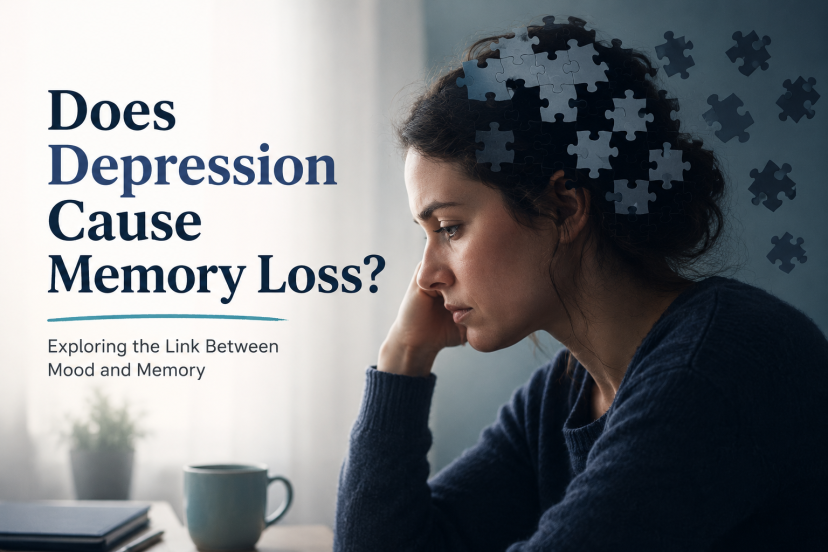
Have you ever walked into a room and completely forgotten why you went there? Or found yourself staring at a sentence you’ve read three times and still can’t retain? I have. And for the longest time, I blamed it on stress, age, or just “having too much on my plate.” But when I finally started connecting the dots, I realized something far more significant was going on — and it had everything to do with my mental health.
So, does depression cause memory loss? The short answer is yes — and the long answer is a fascinating, slightly unsettling journey into how our brains work. Let’s unpack it together.
Understanding the Connection: Does Depression Cause Memory Loss?
When most people think about depression, they picture sadness, low energy, maybe trouble sleeping. What rarely makes the highlight reel is cognitive impairment — specifically, memory problems. But here’s the thing: depression doesn’t just mess with your mood. It literally rewires the way your brain processes and stores information.
Research consistently shows that people living with depression often experience what’s called cognitive dysfunction — difficulty concentrating, slower thinking, and yes, noticeable memory lapses. It’s like trying to run a powerful computer with half its RAM missing. The hardware is there, but the performance is compromised.
How Depression Affects the Brain Physically
The Role of the Hippocampus
The hippocampus is your brain’s filing cabinet — the region most responsible for forming and retrieving memories. Here’s where it gets sobering: prolonged depression has been shown to actually shrink the hippocampus. Chronic stress hormones, particularly cortisol, flood the brain during depressive episodes, and over time, they damage the very neurons responsible for memory formation.
Think of it like a garden that stops getting water. The plants don’t die overnight, but slowly, things start to wilt.
Cortisol and the Stress Hormone Overload
When you’re depressed, your body treats it like a prolonged emergency. Cortisol levels stay elevated for far too long. While cortisol is useful in short bursts (it helps you run from danger), chronic exposure essentially poisons the brain’s memory systems. It disrupts the communication between neurons and impairs the brain’s ability to consolidate new memories.
Reduced BDNF: The Brain’s Fertilizer
This is where things get really interesting — and where I discovered something that changed how I approach brain health entirely. Neuroscientists have identified a protein called BDNF (Brain-Derived Neurotrophic Factor) that acts like fertilizer for the brain. It supports the growth, maintenance, and communication of brain cells.
Depression dramatically lowers BDNF levels. Less BDNF means fewer healthy neural connections, which means poorer memory, slower cognition, and reduced ability to learn. It’s not just a metaphor when scientists say depression “shrinks” your brain — it’s measurably, biochemically true.
Does Depression Cause Memory Loss in Different Ways?
Short-Term Memory vs. Long-Term Memory
Depression doesn’t discriminate. It affects both short-term and long-term memory, though in different ways. Short-term memory — remembering where you put your keys, what someone said five minutes ago — is often the first to suffer. Long-term memory, particularly the emotional tagging of memories, also gets distorted. People with depression often remember negative events more vividly and struggle to recall positive ones.
Sound familiar? That selective memory isn’t a character flaw. It’s neuroscience.
Working Memory and Concentration
Working memory is your brain’s mental scratchpad — the ability to hold information in mind while using it. Depression heavily impairs this function. That’s why completing tasks feels impossibly hard. You start a thought, and by the time you reach the end of the sentence, the beginning has evaporated.
Emotional Memory Bias
Here’s a cruel twist: depression actually sharpens certain memories — specifically painful, negative, or traumatic ones. The brain, flooded with stress chemicals, becomes hyper-focused on threat and loss. This is why people with depression often relive difficult memories vividly while the good ones feel foggy and distant.
The Vicious Cycle: Depression, Memory Loss, and More Depression
Does depression cause memory loss — and does that memory loss make depression worse? Absolutely. It’s a brutal feedback loop. When you can’t remember things, you feel more incompetent, more frustrated, more hopeless. Those feelings deepen the depression, which further damages cognition, which causes more memory loss. Round and round it goes.
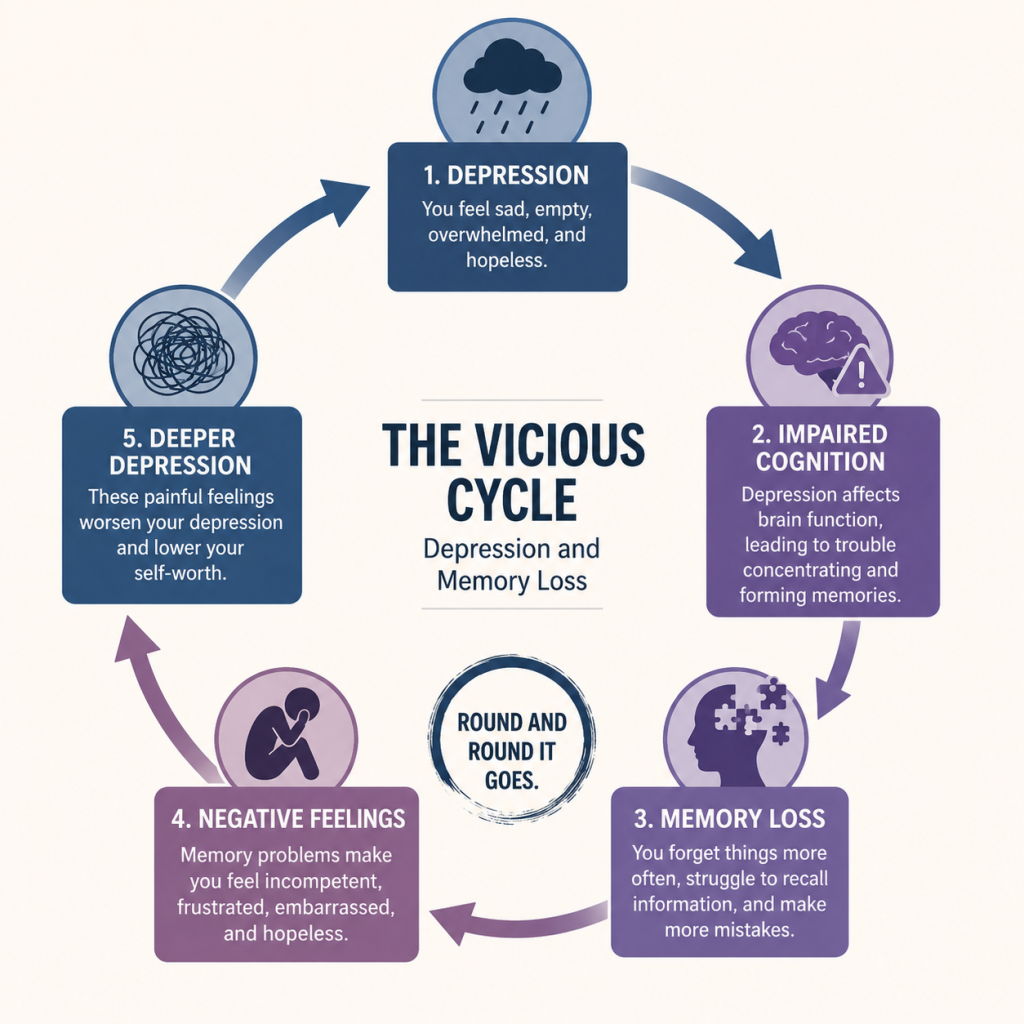
Breaking this cycle requires addressing both the emotional and the neurological dimensions of depression simultaneously.
Can the Brain Recover? The Good News
Neuroplasticity: Your Brain Can Heal
Here’s the hopeful part — and I mean genuinely hopeful, not just motivational-poster hopeful. The brain is neuroplastic, meaning it can form new neural pathways and recover lost function. Even a hippocampus that has shrunk due to prolonged depression can regrow neurons when the right conditions are in place.
The key word here is “conditions.” Recovery doesn’t happen passively. You need to actively support the brain’s healing process.
Lifestyle Changes That Support Memory Recovery
Consistent sleep, regular aerobic exercise, a nutrient-rich diet, and mindfulness practice all contribute meaningfully to brain recovery. Exercise in particular has been shown to dramatically boost BDNF levels — which, as we discussed, is the brain’s own fertilizer for regrowth and reconnection.
Social connection matters too. Isolation deepens depression and cognitive decline; engagement with others stimulates the brain in ways that screens simply can’t replicate.
Supporting Your Brainwaves: A Game-Changer I Discovered
What Are Gamma Brainwaves?
While researching the BDNF connection, I stumbled onto something I hadn’t considered: brainwave frequencies. Specifically, Gamma waves — the brain’s highest-frequency oscillations, associated with peak cognitive performance, learning, and focus. Emerging neuroscience research suggests that Gamma brainwave activity may actually encourage BDNF production, creating the conditions for brain cell repair and growth.
That’s a profound idea. Your brain has its own recovery mode — and you may be able to help activate it.
The Brain Song: Neuroscience-Inspired Audio for a Sharper Mind
This is where I want to share something I’ve personally found fascinating and worth trying. It’s called The Brain Song — a simple 12-minute digital audio designed around exactly this research.
The Brain Song uses advanced sound patterns to gently guide your brain toward Gamma frequencies. It’s not magic. It’s applied neuroscience — the kind of tool that makes you wonder why nobody told you about it sooner.
Here’s what makes it compelling:
- 12 minutes a day — that’s it. Less time than a coffee break.
- It works by activating brainwave patterns linked with BDNF, the very protein that depression depletes.
- It’s completely non-invasive and safe — you listen, your brain responds.
- It can be used at home, on your own schedule, with zero equipment beyond headphones.
When you’re dealing with depression-related memory loss, you want solutions that are accessible, science-backed, and low-friction. The Brain Song checks all three boxes. Thousands of people are already using it to support focus, learning, and overall mental wellness — and the risk-free access means you have nothing to lose by trying it.
If you’re serious about supporting your brain’s recovery from depression-related cognitive decline, The Brain Song deserves your attention. Don’t just accept foggy thinking as your new normal.
What I Do Daily to Fight Depression-Related Memory Loss
My Personal Routine
I’m not a doctor, and I’m not pretending to be. But here’s what I’ve found genuinely helpful in my own experience with depression and cognitive fog:
Morning: I start with 12 minutes of The Brain Song before checking my phone. It sets a calm, focused tone for the day without the usual mental scramble.
Exercise: Even a 20-minute walk significantly improves my cognitive clarity. The research backs this up — aerobic exercise is one of the most powerful natural BDNF boosters known to science.
Sleep hygiene: I protect my sleep like it’s my most valuable asset. Because it is. Memory consolidation happens during sleep, and depression already disrupts sleep architecture enough without me adding to the problem.
Journaling: Writing down three things I remember clearly from each day sounds simple, but it actively engages memory retrieval pathways and builds the habit of noticing and retaining information.
When to Seek Professional Help
If you’re experiencing persistent memory problems alongside depression, please talk to a healthcare professional. Cognitive impairment from depression is real, it’s recognized, and it’s treatable. Therapy — particularly CBT — has strong evidence for improving both mood and cognition. Medication may also be appropriate. Don’t white-knuckle it alone.
Does Depression Cause Memory Loss in Older Adults?
Age complicates the picture. In older adults, depression-related cognitive decline can sometimes mimic — or accelerate — early dementia. This is called pseudodementia, and it’s critically important to distinguish between the two, because depression-related memory loss is far more reversible than dementia.
If you’re older and noticing both mood changes and memory problems, get assessed sooner rather than later. The window for intervention is real, and it matters.
Conclusion
So — does depression cause memory loss? Without a shadow of a doubt, yes. But here’s what I want you to take away from this: your brain is not broken, and your memory loss is not permanent. Depression depletes the very neurochemicals your brain needs to function at its best, but with the right support — professional help, lifestyle changes, and tools like The Brain Song that work with your brain’s natural healing mechanisms — recovery is absolutely possible.
You don’t have to accept foggy thinking, forgotten conversations, and mental exhaustion as your forever. Your brain wants to heal. Give it every advantage you can.
Frequently Asked Questions (FAQs)
1. Does depression cause memory loss permanently?
Not necessarily. While chronic depression can cause measurable changes in the brain, neuroplasticity means the brain retains the ability to recover. With appropriate treatment — therapy, medication if needed, lifestyle changes, and brain-supportive tools — significant cognitive recovery is possible for most people.
2. How do I know if my memory loss is from depression or something else?
Depression-related memory loss typically comes alongside other symptoms: low mood, fatigue, loss of interest, sleep disturbance, and difficulty concentrating. If memory problems appear in isolation without mood symptoms, it’s important to consult a doctor to rule out other causes like thyroid issues, vitamin deficiencies, or early neurological conditions.
3. Can improving my brainwave activity really help with depression-related memory problems?
Emerging research into Gamma brainwaves and their relationship to BDNF production is genuinely exciting. Tools like The Brain Song are designed to support natural brainwave patterns associated with focus and cognitive health. While not a replacement for professional treatment, they represent an accessible, low-risk complement to other recovery strategies.
4. Does depression affect short-term or long-term memory more?
Depression tends to impair short-term and working memory most noticeably — the ability to hold and process information in the moment. Long-term memory is also affected, particularly through emotional memory bias, where negative memories become more prominent and positive ones harder to access.
5. How long does it take to recover memory function after treating depression?
This varies widely depending on how long depression was untreated, its severity, age, and other individual factors. Some people notice cognitive improvements within weeks of starting treatment; for others, full recovery may take months. Consistency with treatment, sleep, exercise, and brain-supportive habits significantly accelerates the timeline.
Related Articles
100 Mental Health Quotes That Will Change Your Self-Talk
Why Ashwagandha Gummies Are Revolutionizing Stress Relief
How to Get Rid of Brain Fog During Menopause
Best Menopause Supplements That Changed My Life
Disclaimer: This article is for informational purposes only and does not constitute medical advice. If you are experiencing depression or cognitive difficulties, please consult a qualified healthcare professional.