Five Kintsugi Lessons That Can Transform Your Emotional Health
I didn’t expect a broken teacup to change the way I think about healing.
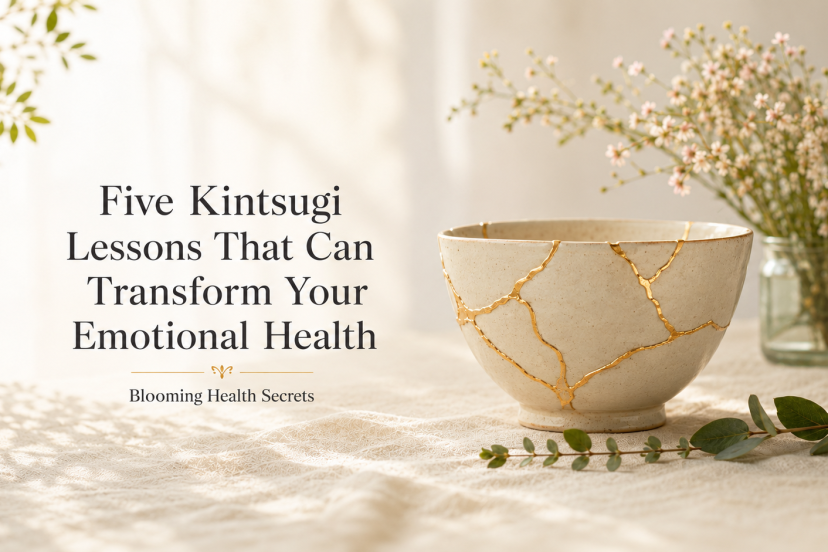
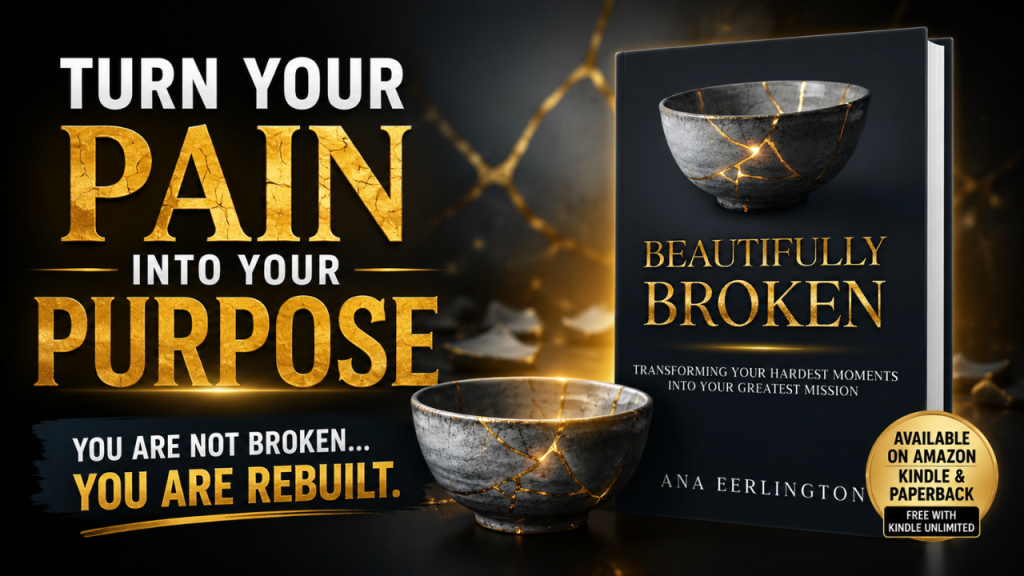
A few weeks ago, I picked up Beautifully Broken, and I finished it in two sittings — not because it was a light read, but because I couldn’t put it down. The book is built around Kintsugi, the centuries-old Japanese art of repairing shattered pottery with gold-dusted lacquer. Instead of hiding the cracks, the artisan highlights them. The break becomes the most beautiful part of the piece. It sounds like a simple metaphor. But by the second chapter, I realized I wasn’t just reading about pottery. I was reading about my own emotional health — the parts of me I’d spent years trying to hide instead of gild.
Here are five Kintsugi lessons from the book that stuck with me, and that I think anyone working on their emotional health needs to hear.
1. Cracks Are Not the End of the Story
In Kintsugi, a shattered bowl isn’t thrown away — the break is simply the middle of its story, not the conclusion. That reframe alone was worth the price of the book for me. So much of what we call “emotional health” gets treated like a finish line: get over it, move on, be fixed. Beautifully Broken argues something gentler and, honestly, more truthful — that the crack itself is part of an ongoing story, not proof the story is over.
I started applying this the next time an old wound resurfaced. Instead of asking “why am I still dealing with this?” I asked “what is this crack still trying to tell me?” It changed the entire tone of the conversation I was having with myself.
2. Repair Takes Time — and That’s the Point
Kintsugi is slow by design. The lacquer used to bond broken pottery can take weeks to cure between layers; there’s no shortcut to rushing gold dust onto a fresh crack. The book draws a direct line between this and emotional healing: the slowness isn’t a flaw in the process, it’s the process.
This lesson hit hardest for me because I’m someone who wants emotional health to be a project I can check off a list. Beautifully Broken made a compelling case that rushing repair — in pottery or in people — usually just means it doesn’t hold.
3. What Breaks You Can Also Be What Makes You Valuable
Here’s the detail that stayed with me longest: a Kintsugi-repaired piece is often considered more valuable than the original, unbroken version. Collectors seek them out specifically because of the gold seams. The book uses this to make a quiet but powerful point about emotional health — that the qualities we develop through hardship (a sharper empathy, a harder-won patience, a clearer sense of what actually matters) aren’t consolation prizes. They’re the value itself.
I won’t pretend this lesson didn’t sting a little going down. It’s easier to wish the break had never happened than to sit with the idea that it added something. But the book doesn’t let you off that easily, and I’m glad it didn’t.
4. Every Crack Has Its Own Pattern — Don’t Compare Seams
No two Kintsugi pieces are repaired the same way, because no two breaks are the same shape. Reading that line, I thought immediately about how much energy I’ve spent comparing my own emotional timeline to other people’s — why they seemed to “get over” something faster, why my seams look different from theirs.
This is one of the more practical emotional health takeaways in the book: your healing pattern is allowed to be unlike anyone else’s. Comparison isn’t just unhelpful here, it misunderstands what repair actually is.
5. The Gold Is Visible on Purpose
Maybe the most important lesson: Kintsugi never disguises the repair. The gold seams aren’t camouflage, they’re the point — visible proof that something was broken and mended with care. Beautifully Broken uses this as an invitation to stop hiding our own repair work, whether that means being honest with a friend about a hard season or simply not performing “fine” when we’re not.
For emotional health specifically, this might be the most transformative lesson of the five. Concealment takes energy. Visibility — even just to yourself — is where a lot of real healing actually starts.
Why This Book Is Worth Your Time
What makes Beautifully Broken different from a lot of healing-and-resilience books I’ve picked up is that it never rushes you toward a tidy resolution. It sits in the cracks with you, gold dust and all, and trusts you to find your own pace through them. If you’re in a season where your emotional health feels more like a mosaic in progress than a finished picture, I think you’ll find the same thing I did — a book that doesn’t ask you to hide the breaks, but to notice what’s forming in the gold.
If these five lessons resonated with you, Beautifully Broken: Transforming Your Hardest Moments Into Your Greatest Mission is worth reading in full. It’s the kind of book you’ll want to underline, dog-ear, and pass along to someone who’s in the middle of their own repair.